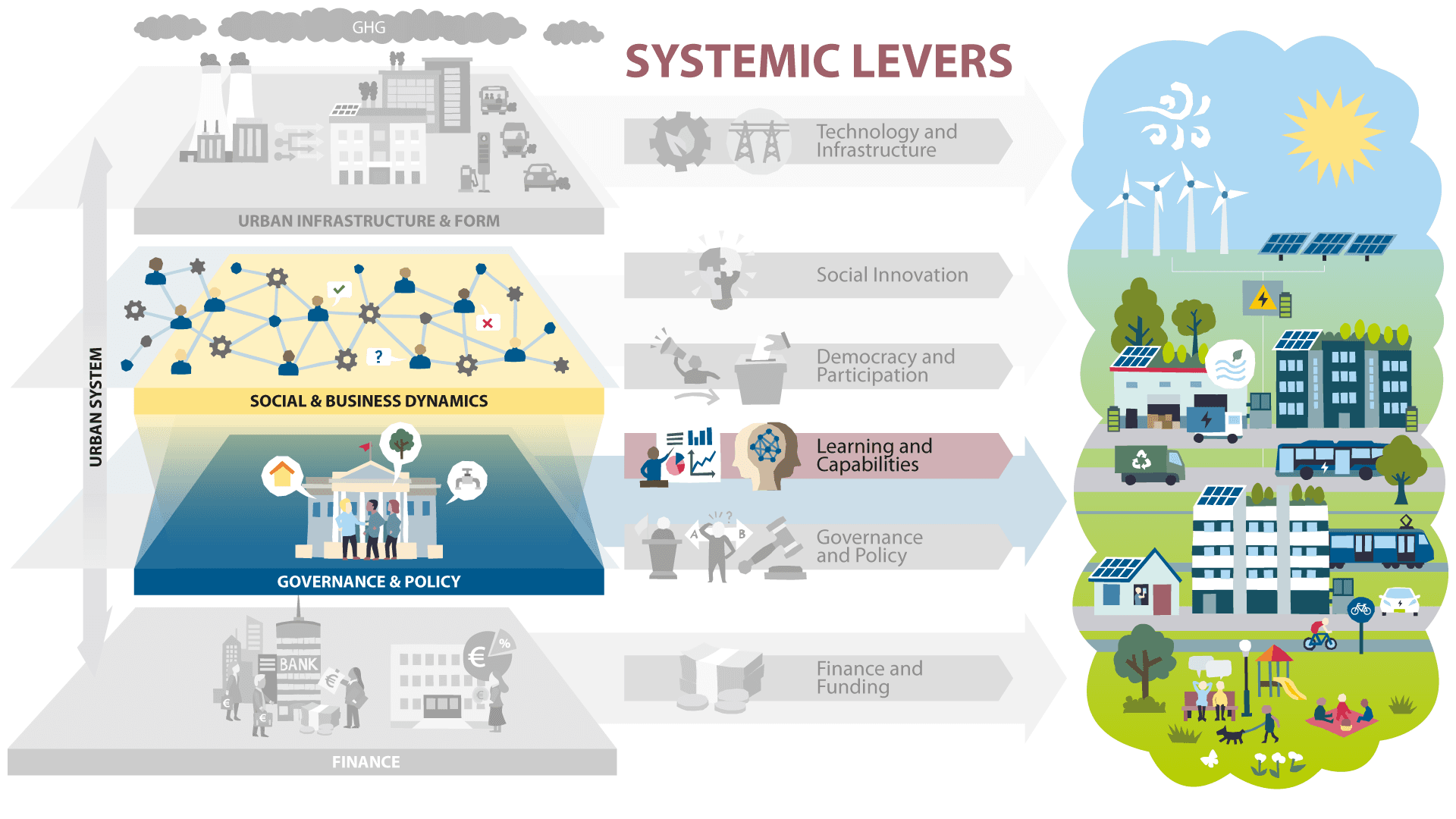

Systemic Levers
image
This page provides an overview of resources on solutions related to engaging citizens, companies and the private sector, civic organizations, NGOs and politicians.
location_pin
Engaging Stakeholders

Democratic decision-making and agency are critical to achieve 100 climate-neutral cities in 2030 and a climate-neutral Europe in 2050.  Reaching climate neutrality will require a possible but unprecedented transition, in terms of speed and scale, to reach climate-neutrality by 2030. Local governments will need to act together with business leaders, knowledge institutions, disruptive innovators, artists, civil society, and citizens, to radically multiply everyone's collective actions towards climate-neutrality. This requires deeper and wider engagement and participation of citizens and urban stakeholders in the design, development, investment, implementation and monitoring of climate actions.

Transitioning an entire city to climate-neutrality requires a recognition of the different perspectives, interests and climate vulnerability of each community and stakeholder. No single individual or group can bring about the change on their own, everyone’s voice needs to matter. Reaching climate-neutrality requires the creativity, passion, energy and drive of citizens and stakeholders, who need to become partners, allies and co-orchestrators in order for change to occur. Cities across Europe are already building new democratic approaches that are people-centred, committed to community and climate resilience, and respond to the local context. This will be the foundation of social innovation but also more widely of effective, legitimate, and socially just city action for climate-neutrality, creating strong and healthier communities.
Reading Resources
Citizens and urban stakeholders engagement
This is a key resource that contain all NZC resources on citizen and urban stakeholder participation
Citizens Participation and Stakeholder Engagement
This resource is Quick Reads format and outlines key principles and tools for deep and systemic citizen and stakeholder engagement in climate neutrality transitions, emphasising democratic infrastructure, trust, and inclusive participation. It supports cities in designing people-centred, long-term engagement strategies and collaborative ecosystems to enable effective, legitimate, and socially just climate action.
Strategies for Designing Spaces for Encounter
This document introduces Spaces for Encounter, a framework for creating facilitated environments where citizens and stakeholders interact across power differences to build trust and collaboration. It helps cities understand the values and conditions needed to design inclusive engagement spaces that support climate transition processes.
Day to Day Lifecycle: Infrastructuring democracy
This tool provides a structured framework (“Infrastructuring Democracy” canvas) to plan and embed stakeholder engagement across all phases of an urban project lifecycle. It helps cities and stakeholders design continuous, adaptive participation strategies, linking engagement goals, methods, and timing to strengthen collaboration and improve climate transition project outcomes.
Stitching the City – Valencia as a Laboratory for Democratic Infrastructure
This article explores how a climate crisis in Valencia was used to prototype democratic infrastructure through civic hubs (“Spaces for Encounter”) enabling collaboration between citizens and institutions. It is useful for cities as it offers a replicable model to scale participatory governance and community-led climate action beyond emergency responses.
Just Transition in Practice: Lessons from the Ground
This article synthesises practical approaches to implementing a just transition in cities, drawing on case studies (e.g. Madrid, Barcelona, Valencia, Stockholm) across the built environment, governance, and municipal operations. It is useful for cities working on climate neutrality as it highlights concrete tools (energy communities, public assets, governance frameworks) to integrate social equity, participation, and fairness into climate action.
Meaningful citizen engagement in the climate transition – four lessons from Helsingborg
This article presents four practical lessons from Helsingborg on meaningful citizen engagement in the climate transition, including broadening narratives, multi-channel engagement, cross-departmental collaboration, and the city’s role as an enabler. It is useful for cities working on climate neutrality as it provides actionable strategies to move from participation commitments to effective, inclusive engagement practices that build trust and drive behavioural change.
Bridging the Energy Transition: Energy Communities and Combating Energy Poverty in European Cities
Energy communities embody collective action towards renewable energy adoption, which is integral to achieving the EU’s climate-neutrality goals.
The wild city: collaborative practices in urban renaturing
This book explores the various threads, challenges and chances which both art and science might encounter in co-creating NBS, pointing to recover, recreate or reinvent nature in more humanized urban landscapes. The purpose of this compilation is thus to give consistency to a novel state of practice, depicting the increasing benefits and diverse approaches of collective intelligence and co-creation for NBS and provide a detailed analysis of methodologies in the relationship between diverse social agents.
Social Innovation Projects for Climate Neutral Cities: Making Municipalities Sustainable with People-Based Solutions
This open access book examines the role of social innovation in cities as an important lever towards climate neutrality. Social innovations are people-centred collaborative solutions, activating the urban ecosystem for change and providing platforms for citizens, civic organizations, the private sector, and governmental institutions to collaborate towards the goal of reducing greenhouse gas (GHG) emissions. The book, based on work developed within the EU-funded project NetZeroCities, which aims to support over 100 European cities to be climate-neutral by 2030, outlines methods, cases, and pathways of social innovation in Europe. It presents social innovation design process pathways through methods, categories of actions, and related cases for developing and scaling social innovations at the urban level, contributing to a systemic approach to tackle the grand challenge of reaching net zero. Within these pages, researchers and policymakers can find examples of cities that have deployed innovative public administration practices by systemically embedding social innovation in varied fields of urban action plans, including energy, citizen engagement, and behavioural change for lowering carbon emissions and increasing well-being.
Recommendations and best practices for regional and national endorsements and commitments in the Climate City Contracts
This resource is designed to support Mission Cities seeking to strengthen their collaboration with regional and national authorities, helping to secure impactful commitments in future iterations of their Climate City Contracts. Additionally, the document serves as an inspiration for regional and national authorities, offering practical recommendations and ideas for endorsing or contributing meaningful commitments to support cities on their journey to climate neutrality.
Ecosystem Activation Tools (PDF Version)
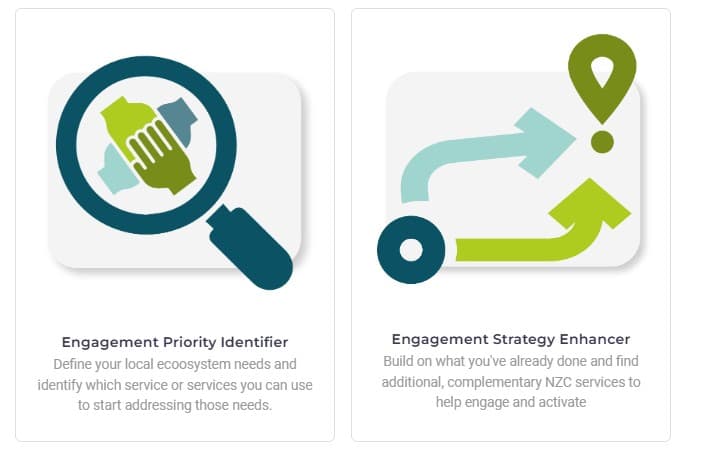
This resource provides a set of diagnostic tools (Ecosystem Activation Tools) to assess local engagement needs and identify appropriate strategies for involving citizens and stakeholders. It helps cities prioritise actions and connect with complementary engagement services to activate and strengthen their local ecosystem for climate transition.
Engagement Building Blocks - Instructions
This tool provides a visual and collaborative framework to design citizen and stakeholder engagement processes step by step. It helps teams assess needs, compare options, and choose the most suitable building blocks for creating effective participation strategies.
Engagement Building Blocks - Glossary
Terms and meanings to help clarify and support your use of the Engagement Building Blocks.
Engagement Building Blocks - Printable Cards
This documents (PDF) includes all the cards necessary to use the Engagement Building Blocks.
Citizen Engagement Method Builder - Manual
The Manual guides you step by step through the Citizen Engagement Method Builder, a tool that supports city teams design engagement processes that really fit their context. It explains the process, offers facilitation tips, and helps you prepare and run a 2-hour workshop with confidence. Use it as your facilitation companion.
Citizen Engagement Method Cards
A curated set of cards that bring citizen engagement methods to life. Each card explains how a method works, what it’s best suited for, who it can reach, and the time, budget, and capacity it requires.
Citizen Engagement Method Builder - Design Choice Cards
The Design Choice Cards support teams in making deliberate decisions throughout the engagement design process. They help explore different options for participation, influence, methods, and outcomes - highlighting trade-offs and implications along the way.
Citizen Engagement Method Builder - Canvas
It is a hands-on, visual tool that helps city teams design engagement processes that truly fit their context. It guides teams through key design questions and supports intentional choices about who to involve, how, and to what extent.
Just Transition: Orchestrating just transitions in the built environment
Presentation slides from the Community of Practice webinar hosted on 13 November 2025
Understanding Context: Key Questions for Citizen Engagement
This resource provides guiding questions to analyse local context for citizen engagement, covering factors such as resources, political conditions, and social dynamics. It helps cities design more effective and context-sensitive participation processes by identifying constraints, opportunities, and feasibility early on.
Shaping Climate Narratives & Activation (Canvas)
This tool is a 90-minute communication and storytelling exercise designed to develop tailored narratives, key messages, and engagement formats for different stakeholder groups. It helps cities and stakeholders improve strategic outreach by aligning messages with audience needs, motivations, and effective communication channels.
Scaffolding Emergence Canvas
This tool introduces the Scaffolding Emergence Canvas, a framework to map stakeholders and build distributed, multi-actor networks for urban transformation using the Quintuple Helix model. It supports cities in defining roles (pioneers, allies, constellation) and engagement methods, enabling long-term collaboration and adaptive governance for systemic climate and sustainability transitions.
Beyond One-Off Participation: Building Long-Term Citizen Engagement for Climate Action
This article presents three approaches to long-term citizen engagement for climate action—Participation Practice, City as Enabler, and Transition Governance—highlighting how to embed participation into systems and governance. It is useful for cities working on climate neutrality as it provides practical models to institutionalise participation, build trust, and enable sustained collaboration with citizens.
Shaping Climate Narratives: 8 Tips for Building Trust and Driving Change
This article outlines eight practical strategies for climate communication and narrative-building (e.g. co-benefits framing, storytelling, and co-creation) to build public trust and engagement. It is useful for cities working on climate neutrality as it connects communication approaches with policy acceptance and citizen participation.
Citizen Participation Platforms
Introduces digital participation platforms that enable citizen engagement, co-creation and feedback in urban planning and climate governance.
Case Studies
Description The NetZeroCities Course is designed for professionals, policymakers, and changemakers committed to driving climate action.
The Role of Philanthropy in Turin’s Urban Climate Transition
This case study examines the contribution of Fondazione Compagnia di San Paolo to Turin’s pathway toward climate neutrality through two complementary initiatives: the CLICC project and the TPL Carbon Free Innovation Center. Together, these initiatives illustrate how philanthropy can operate both as a builder of systemic urban capacities and as an accelerator of sector-specific innovation. Rather than acting solely as a source of funding, the foundation plays a strategic role in strengthening governance, enabling experimentation and fostering collaboration across institutional and sectoral boundaries.
Nantes: Journey to the Centre of Community Climate Action
Nantes Metropole's mission to reduce the consumption and CO2 emissions per inhabitant by half by 2030, places community at the heart. With their project 'Together Towards Climate Neutrality', they invite citizens take ownership of the city's climate goals and adapt them to their own needs, reaching new and diverse groups through local partnerships and citizen challenges that deliberately connects multiple elements to climate that are closer to citizens' daily concerns such as mobility, education, sports, health and community.
Guimarães: From Cradle of a Nation to Cradle of Innovation
-
Malmö’s bold road to climate neutrality: A model for systemic change
-
Systemic innovation in Umeå requires creative energy and a black belt in bureaucracy
A case study of how Umeå set out to overcome organisational silos and fragmented climate governance by combining systemic innovation methods with cross-sector collaboration. Through its North Star Pilot, the city embedded Innovation Officers within municipal departments and equipped senior leaders with transition training, creating both internal connectors and visible champions for climate action. Rather than focusing on a single technical fix, the initiative strengthened relationships, aligned departments around shared goals, and formalised new leadership roles such as a Chief of Sustainability.
Drammen’s zero-emission mosaic for 2030
-
Antwerp's Participatory Budget
The Participatory Budget is a tool for the City of Antwerp to give citizens autonomy to spend 10% of the city’s budget annually on projects that could enrich their lives.
Ioannina: Local groups collaborate for climate neutral zones
Shows co-creation of climate-neutral zones in Ioannina integrating mobility, buildings, and nature-based solutions.
3D Participatory Approach to Stakeholder Engagement
Guimarães has designed and implemented the 3D Participatory Approach, a stakeholder engagement model built on three dimensions: creating identity, transforming the landscape, and building the future.
Budapest Climate Agency
Budapest has launched a Pilot Activity, Budapest CARES - Climate Agency for Renovation of homES, to develop and deploy strategic, institutional, and financial support mechanisms and initiatives for building retrofit, with the ambition of accelerating the transition.
One-Stop Platform for Climate Communication
Turku developed and launched a new multilingual digital platform on the municipal website. It's a digital space that serves multiple audiences (residents, businesses, city staff, and leadership) and provides tailored content and tools on climate and nature topics to different users.
Lyon's Pilot City Activity: The Climate Hall Lyon 2030
Lyon's pilot in NetZeroCities seeks to strengthen the involvement of citizens and local stakeholders by promoting skills development and synergies, and the multiplication of initiatives through the prefiguration of a flagship venue on climate and resilience.
Wisdom Council on Bio-based Economy
This resource presents the Wisdom Council on Bio-based Economy in Nordrhein-Westfalen as a deliberative process where citizens engage in expert-facilitated dialogues to co-develop policy recommendations. It highlights how participatory approaches can inform sustainable transitions toward a plant-based bioeconomy.
Vision workshop in Sztum (Poland) - inspiring collaboration for climate neutrality
This resource presents Sztum’s Vision Workshop as an inclusive, participatory format that brings together local stakeholders to explore everyday perspectives on climate neutrality. It highlights how collective reflection and co-creation can help build a shared vision for a climate-neutral future grounded in people’s lived experiences.
Residents Assemble for Climate
This resource presents Tartu’s first Climate Assembly as a participatory process where residents co-created 66 concrete recommendations on sustainable mobility, biodiversity, and climate neutrality. It highlights how deliberative engagement can support locally grounded, actionable climate strategies.
Resilient BoTu 2028
This resource explores Resilient BoTu 2028 in Rotterdam as a community-driven approach to climate transition that uses the energy shift to strengthen social cohesion and local capacity. It highlights how Asset-Based Community Development empowers residents, builds local skills and jobs, and addresses energy poverty through integrated, neighbourhood-level action.
People's Policy on Child Wellbeing
This resource presents the People’s Policy on Child Wellbeing in South Australia as a citizen-led policymaking initiative, where residents collaboratively developed policy through a deliberative process. It highlights how shifting decision-making power to citizens can redefine traditional governance and strengthen democratic legitimacy.
Paris' Standing Citizens' Assembly
This resource presents the permanent Paris Citizens’ Assembly as a pioneering example of institutionalised deliberative democracy, bringing together 100 randomly selected residents to represent the diversity of the city. It highlights how civic lottery-based assemblies can embed ongoing, representative citizen participation in public decision-making.
Living Streets of Ghent
This resource presents the Living Streets of Ghent as a citizen-led urban experiment that temporarily transforms streets into car-free, social spaces. It highlights how co-design and real-life testing can improve liveability, shift mobility behaviours, and support long-term transitions toward more sustainable and people-centred urban environments.
The one planet city
This resource explores how Guimarães implements its “one planet city” vision by measuring and reducing ecological footprints at both municipal and individual levels. It highlights how data-driven approaches can guide sustainable actions and increase citizen awareness and responsibility in the climate transition.
Grenoble Alpes Métropole’s Citizen Convention for Climate
This resource examines Grenoble Alpes Métropole’s participatory climate convention, showing how strong political commitment, stakeholder engagement, and dedicated funding enabled the co-creation of climate mitigation strategies with citizens. It also highlights key challenges—such as coordination, planning, and costs—while offering lessons on how to design impactful, legitimate, and replicable citizen assemblies.
Berlin's Kiezblocks
Berlin’s Kiezblocks is a case study on participatory, citizen-led urban mobility transformation in Berlin, focusing on reducing motorised traffic and reclaiming neighbourhood streets. The resource explores how citizen petitions, co-design processes, and collaboration with local authorities enable the creation of low-traffic areas, improved air quality, and more liveable public spaces, offering insights into scalable, bottom-up approaches to sustainable urban planning.
Natural gas-free homes: drivers and barriers for residents
This method analyses the drivers and barriers residents face in moving toward natural gas-free homes, using a customer journey approach and qualitative research. It helps cities and stakeholders better understand resident motivations, resistance, and support needs when planning inclusive home energy transition and retrofit strategies.
Wards Corner, Public-Commons Partnership (PCP)
This case study presents Wards Corner in London, where a Public-Commons Partnership (PCP) enables community co-ownership and democratic governance of a local market redevelopment. It shows how community-led models can shape urban development, preserve local economies, and promote inclusive, shared decision-making.
Crowdsourcing the Mexico City Constitution
This case study presents how Mexico City used crowdsourcing (surveys, petitions, kiosks, assemblies) to involve citizens in drafting a new constitution. It shows how multi-channel participation can strengthen democratic decision-making and integrate citizen input into large-scale policy frameworks.
Participatory environmental monitoring committees in mining contexts
This case study presents a community-led environmental monitoring committee in Panama using citizen science to track water quality and hold a mining company accountable. It shows how participatory monitoring can improve environmental governance, transparency, and local capacity to address pollution impacts.
Democratic energy transition in Amsterdam
This case study explores the democratic energy transition in Amsterdam, using the Climate Democracy Model to strengthen civic engagement, collaboration with energy communities, and experimentation with new governance approaches. It shows how inclusive, participatory frameworks can shift energy transition from technocratic planning to community-driven, equitable climate action.
EmpowerMed
This case study presents EmpowerMed, a project tackling energy poverty through community empowerment and participatory approaches (Collective Advisory Assemblies). It shows how peer learning and data-driven insights can support more inclusive and just climate transition outcomes.
Bridging Divides: Collaborating for Sustainable Development in São Paulo
This case study presents a multi-stakeholder collaboration in São Paulo’s North Zone to advance sustainable development through participatory workshops, stakeholder mapping, and cross-sector partnerships. It demonstrates how collaborative governance and local alliances can drive concrete urban improvements and support integrated social, environmental, and climate transition outcomes.
Järva Dialog
This case study describes the Järva Dialog in Stockholm, a large-scale participatory process involving residents in energy-efficient housing renovations through open meetings, education, and community engagement. It shows how cities can use inclusive dialogue and capacity-building to improve retrofit projects, increase acceptance, and deliver both energy efficiency and social co-benefits.
Grassroots, new routes? Citizens and stakeholders take the lead on climate neutrality in Parma, Lyon, Guimarães, and Bristol
Experiences, insights, and best practices from four cities: Parma, Lyon, Guimarães, and Bristol – in engaging citizens and organisations in local climate initiatives.
How One Participation Challenge Sparked Systemic Transformation
This article presents a networked approach to citizen participation and climate transition, using a Cluj-Napoca case to show how a pilot project (retrofitting) can trigger systemic change through stakeholder mapping and engagement strategies. It is useful for cities working on climate neutrality as it highlights how to build long-term capacities, actor networks, and participatory infrastructures that go beyond individual projects.
Citizens' Climate Assembly
The Citizens' Climate Assembly was a deliberative process of 100 people chosen by lottery between the ages of 16 and 75 to discuss the climate emergency situation in the city and they defined actions and solutions to improve it, answering the question: What can we do to address the climate emergency?
Showcase
showcase imageOpen tool
Learning from Cities

A map is loading