
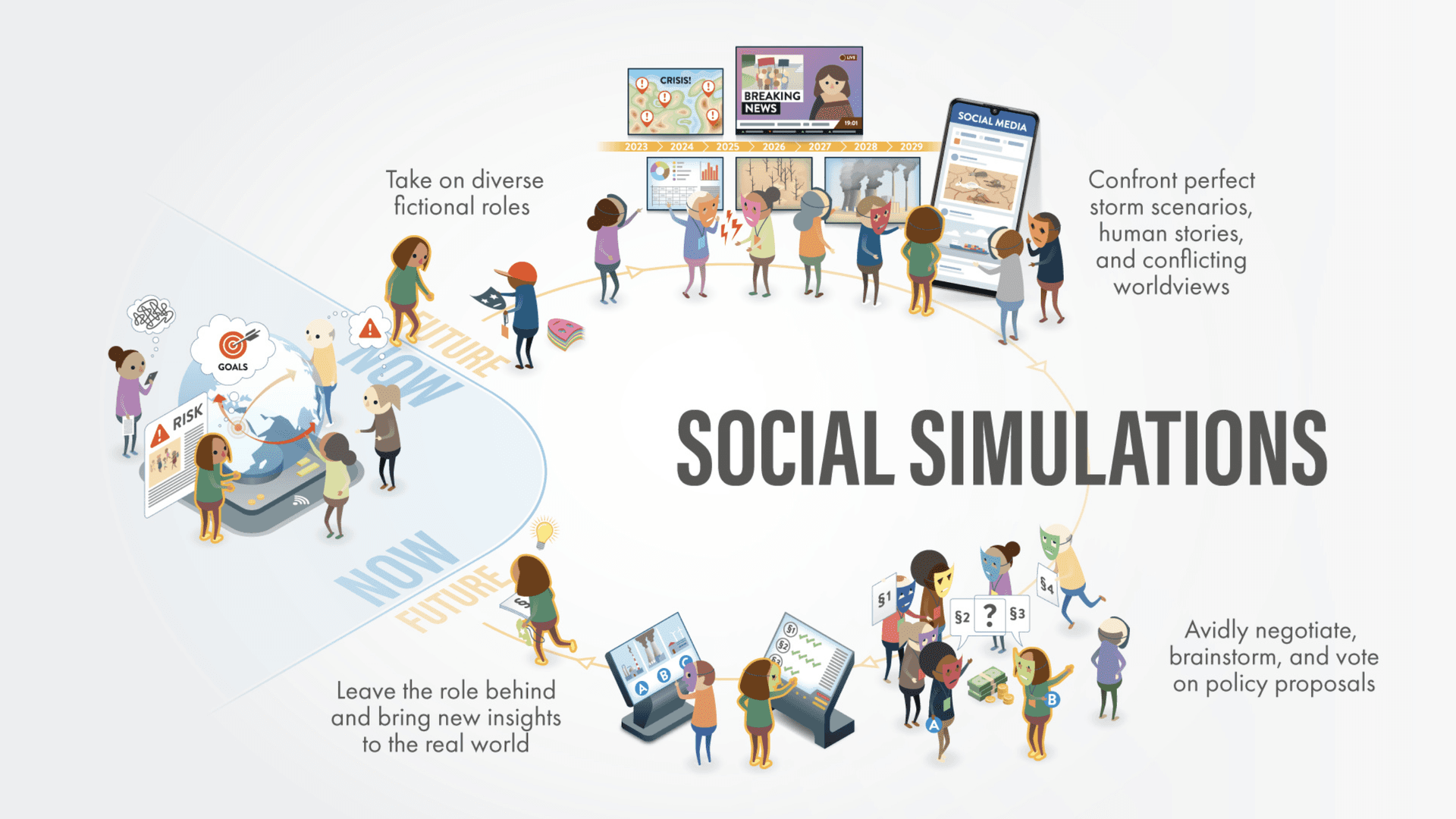
Social simulations can be scaled from small groups of about a dozen people to large groups of 100 or more, run in flexible spaces equipped with projectors, Wi‑Fi and a web-based application, and typically require at least a two-hour session plus preparation.
In a typical simulation, participants are assigned evidence-based stakeholder roles and backstories and are immersed in a decarbonisation challenge, such as steering a European city toward climate neutrality while addressing justice-sensitive trade-offs like energy poverty, unemployment or housing affordability. Working with a rich narrative supported by data and multimedia storylines, they deliberate options, negotiate alliances and co-create transition pathways that balance climate ambition with social needs, before engaging in a structured debrief to extract lessons and formulate concrete policy recommendations.
For the NetZeroCities Seasonal Schools, the Solevento Social Simulation was created as an immersive workshop that placed participants in a near‑future decarbonisation challenge in Solevento, a fictional European city. It enabled city practitioners to experience, in a safe environment, the tensions and trade‑offs involved in delivering building retrofits and clean energy transitions.
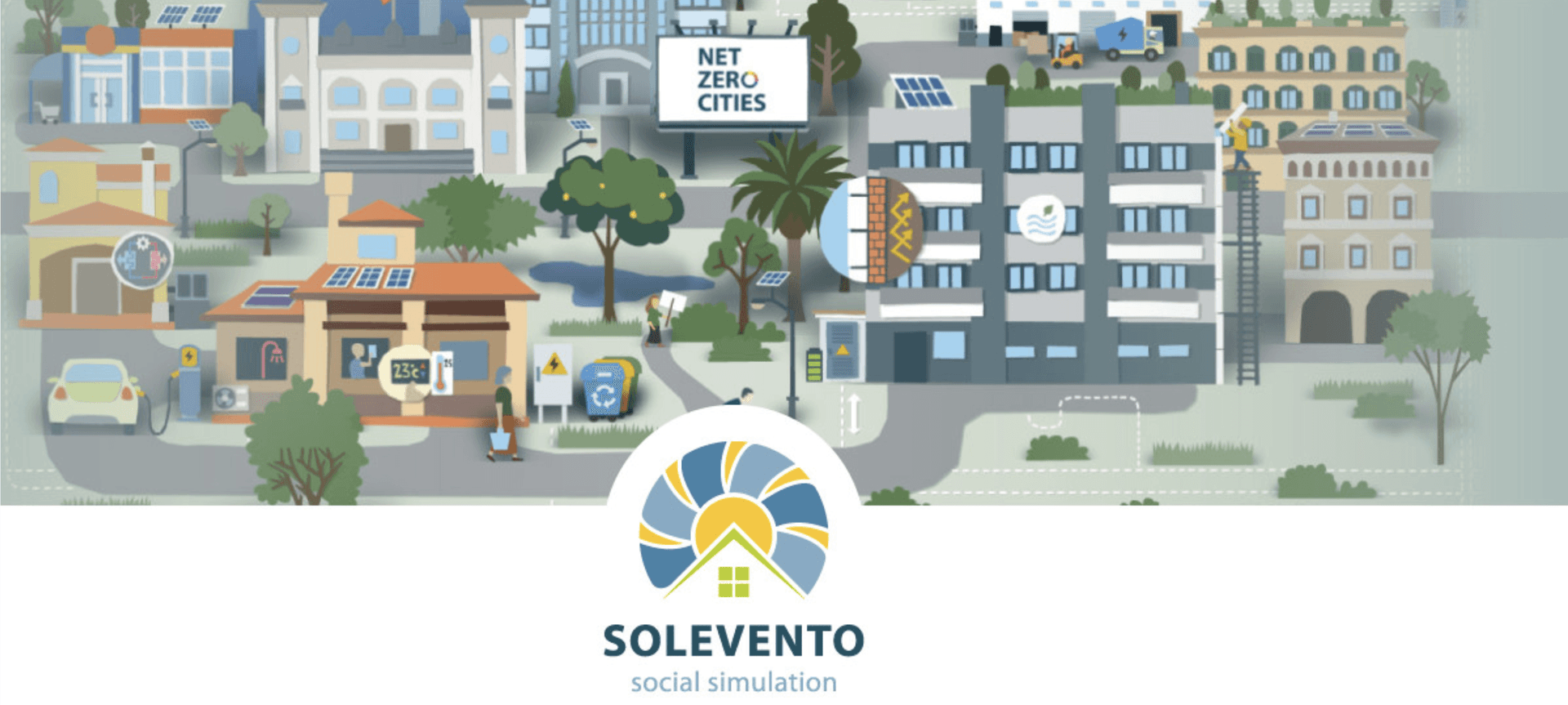
For many participants, the simulation built empathy for other stakeholders, highlighted the non‑linear, systemic nature of urban transitions, and created space to discuss ambitious decarbonisation and governance strategies without real‑world consequences. Solevento can be reused by cities and facilitators to immerse teams in built‑environment decarbonisation challenges, explore financing pathways for retrofits and renewables, and catalyse deeper conversations on governance and climate justice, supported by curated readings and case studies that link the fictional city to real European examples.